
Abanaki Corporation Oil Skimming Division
17387 Munn Road
Chagrin Falls, OH 44023
Phone: (440) 543-7400
Email: skimmers@abanaki.com
Fax: (440) 543-7404
ISO 9001:2015 Certified Company
Terms and Conditions

Abanaki Corporation Oil Skimming Division
17387 Munn Road
Chagrin Falls, OH 44023
Phone: (440) 543-7400
Email: skimmers@abanaki.com
Fax: (440) 543-7404
ISO 9001:2015 Certified Company
Terms and Conditions
Tips for Effective Oil Skimming – Part 2 | Abanaki
Oil skimmers are simple, dependable and effective tools for removing oil, grease and other hydrocarbons from water and coolants. Often, an oil skimmer by itself can achieve the desired level of water purity.
In more demanding situations, oil skimming is a cost-effective means of removing most of the oil before using more complicated and costly treatments such as coalescers, membrane filters and chemical processes.
As with any piece of industrial equipment, there are guidelines that should be followed to promote optimal efficiency, as well as a long, trouble free operational life. Let’s take a look at a few tips that will help you get the most out your oil skimmer.
A skimmer is most effective when there is no turbulence in the media
Skimmers rely on the differences in specific gravities between oil and coolant or water that causes oil to float on top of water. In applications where turbulence is present, the process of oil rising to the top will be prolonged, with some oil remaining below the water until conditions allow gravity to ultimately prevail. Operating the skimmer predominantly during quiet times will give oil the chance to rise to surface and allow the unit to operate more effectively.
Keep a spare belt and wiper blades on hand
Being prepared for the unexpected is always good practice. While blades and belt are typically very durable and trouble free, you never want to be in a situation where the skimmer must be taken out of service until a new belt or wiper blades arrive from halfway across the country.
Choose a belt that is long enough so that the tail pulley is submerged when the liquid level is at its lowest point
Water and coolant levels can vary over time. Therefore, the skimmer needs to be capable of collecting oil when the levels are at their lowest. Taking the time to correctly size the belt prior to purchasing the unit will save a lot of headaches down the road.
Properly size the skimmer to the size of tank
Skimmers operate by breaking surface tension which allows oil to be attracted to the belt. If a unit is undersized, it will not have the strength to disrupt the surface tension of the liquid, meaning that oil will never make it to the belt. Sizing of the unit should always be based on the overall area of the tank, not the volume of oil that is expected in the tank. This will guarantee that the skimmer will be capable of overcoming the surface tension that is present for the given tank area.
To learn more about oil skimmers, please contact our experts at 440-543-7400 or visit our website: www.abanaki.com
Read more
Tips for Effective Oil Skimming – Part 1 | Abanaki
Oil skimmers are tremendously versatile, especially when the wide range of venues where they are called upon to operate is considered. Basically, anywhere oil and water have the potential to mix presents an opportunity for a skimmer to be put to good use, keeping oil out of water or coolant so that it can be recycled, re-used, or safely discharged.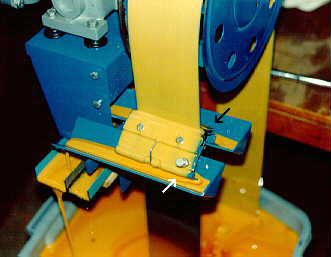
The applications where these unsung workhorses perform are numerous, with skimmers being called upon to keep oil out of the places it does not belong, such as machinery coolant, bilge tanks, and wastewater that is discharged from parking garages. While there are differences in design from one skimmer vendor to the next or variations based upon their application, all skimmers ultimately rely on the differences in specific gravity and surface tension in oil and water to allow them to attract and capture oil. A rotating disc or belt is then used to collect the oil, where it can then be recycled or reused.
Make sure the skimmer is mounted level
It is strongly recommended to take the time during the initial installation to check that the skimmer is mounted and fastened securely in an orientation that is level. This is especially critical for skimmers with free-hanging belts to ensure proper tracking over the pulleys. This will promote better performance and reduce premature wear on the belt, wipers, pulleys, and motor.
Proper positioning of wiper blades is essential
Maintaining the proper amount of tension on the wiper blades is key to optimizing skimmer performance. Striking a balance that allows the blades to contact the belt in a manner that allows them to remove the majority, if not all of the oil from the belt is ideal. Over tightened wiper blades will cause premature wear on blades. Under-tightening leads to poor recovery results, as the oil collected by the belt is not fully removed as the belt passes over the wipers.
Run the skimmer when oil is present
While this may seem like a rather obvious point, running a skimmer constantly may actually be counterproductive, because it increases the likelihood that coolant or water will be picked up by the belt. A timer or an oil in water sensor can be employed to optimize skimmer operating efficiency by controlling the times when the unit is running.
Oil Skimmers Get the Dirty Jobs Done
To learn more about oil skimmers, please contact our experts at 440-543-7400 or visit our website: www.abanaki.com
Read more
Oil Skimmer Frequently Asked Questions: Part 4 | Abanaki
I have numerous totes that only need oil skimmed out every once in a while. Do you have oil skimmer that easily movable?
A good fit for this application usually ends up being our Tote-It belt oil skimmer. At about 40 pounds, this unit is easy to carry from one tote to the next. This belt oil skimmer comes in different belt widths and lengths to help customize how much oil will need removed and the tank dimensions.
This level of mobility can eliminate the need for having one belt oil skimmer for every tote or trying to carry around a more cumbersome unit to each tank.
When should I use a belt skimmer and when should I use a tube skimmer?
Belt Skimmers provide the highest pickup rates because belts have more surface area than tubes. Belt skimmers may be mounted on a frame over a sump, pit, or pond, or they may be mounted directly to the top or side of a tank. The pulley is located near the bottom and the belt extends above the fluid surface, accommodating fluctuating fluid levels. Belts are easier to manufacture than tubes and therefore come in a wider variety of materials to meet the specific requirements of the application and the type of oil to be removed. The belt-and-pulley design is simple and reliable, enabling belt skimmers to be used in harsh applications with little maintenance, even in high or low temperatures.
The Tubetastic line of Tube Skimmers can be used in the same applications as belt skimmers, however they have certain advantages. Tubes are useful in applications where there is no top access to the coolant sump. The tube breaks the surface of the oil laden coolant causing oil to stick to the tube. The oil is then wiped off and discharged into the oil collection container.
The Oil Viper Tube Skimmers use a tube that floats on the fluid surface and collects free floating oils in water depths as shallow as a few inches. Increased removal rates over other tube skimmers are achieved because its clean-wipe system ensures the tube is oil-free when it returns to the tank.
My oil skimmer isn’t picking up oil from my coolant sump like it did a few days ago. What is going on?
Your coolant may contain rust inhibitors that are coating the metal belt causing a barrier between the the belt and the oil. Try changing to a synthetic belt material such as Elastomer or Polymer. Rust inhibitors do not affect them.
To learn more about oil skimmers, please contact our experts at 440-543-7400 or visit our website: www.abanaki.com
How Do Oil Skimmers Work?
Read more
Oil Skimmer Frequently Asked Questions: Part 3 | Abanaki
How exactly does an oil skimmer work? Do I have to place the skimmer directly where the oil is collecting?
An oil skimmer is a device that uses a belt, tube, or disk placed directly into the product containing oil. The belt, tube, or disk attracts the oil by breaking the surface tension of the water and then runs back to the machine to be wiped clean. If your skimmer is sized right, it will be able to pull the free-floating oil from anywhere in the tank or pit. Oil skimmers should be purchased more by size than by the volume of oil to ensure you are able to skim from the whole surface area.
How can I fix the slipping belt on belt skimmer?
Check to make sure there are no obstructions on the belt as it passes through the wipers. Check to make sure that the tail pulley (bottom roller) turns freely and is free from obstruction. Sometimes the coolant/oil combination in the application can be extremely slippery, making the belt slip. Try adding a ½˝ spacer between the stabilizer bar spring and the mounting base plate to provide extra tension on the belt. The added resistance should keep the belt from slipping.
How many parts per million (ppm) will the oil skimmer get my oil level down to?
Abanaki oil skimmers have satisfied EPA requirements of leaving less than 5 ppm of oil in water. In addition, with an Abanaki Oil Concentrator, the oil skimmer will pick up less than 1% water with the removed product.
To learn more about oil skimmers, please contact our experts at 440-543-7400 or visit our website: www.abanaki.com
Read more
Oil Skimmer Frequently Asked Questions: Part 2 | Abanaki
What is the best belt for oil skimmer?
There is a great deal of variance in applications where belt skimmers are present. Figuring out what would be the best belt material for your belt skimmer will depend on a few factors. For the most part, belts pick up the oil in the same fashion so the big difference is finding what will give you the longest operating life.
The two factors that play into your belt choice the most is your combination of temperature and pH levels. This will typically dictate the use of a steel, elastomer, or polymer belt. When rust inhibitors are present in your application, you will want to stay away from steel because the belt can get coated in the inhibitors reducing the pick-up rate. It is best to call with details of the application and ask your Abanaki representative what will work best with your belt skimmer.
Is it too much water in your oil skimmers?
Sometimes there are situations where your oil skimmer will collect water. If you are running your skimmer 24/7 and the tank or pit runs out of oil, your skimmer will pick up whatever is remaining in the tank, and most of the time that will be water or coolant.
There is a way to prevent this and that is by utilizing an oil water separator(concentrator) in conjunction with your oil skimmer. The oil water concentrator attaches to the skimmer and helps in further separating the water/coolant from your oil. This unit is placed on the back of the skimmer. The skimmed material is drained into the concentrator and then it separates the water from oil. You can then drain the water back into the tank or well through one hose, and the oil drains from another.
Is there a test that I can do to see if a skimmer will pick up my oil?
Yes. The simplest way to test if your oils will be picked up by the skimmer is to stick a PVC pipe or steel rule in the water where the contaminated oil is located and pull it out. The oil that sticks to the pipe or rule indicates that an Abanaki oil skimmer will work in the application.
Call 440-543-7400 to speak with one of our technical sales representatives to specify the proper oil skimmer for your particular application.
To learn more about oil skimmers, please contact our experts at 440-543-7400 or visit our website: www.abanaki.com
Learn how Abanaki oil skimmers help you save by “taking just a little off the top.”
Selecting and sizing your next oil skimmer correctly is important – the wrong decision can cost your facility thousands over the long term.
Watch this webinar.
Read more
Oil Skimmer Frequently Asked Questions: Part 1 | Abanaki
How Do You Know What Size of Oil Skimmer You Should Purchase?
Oil skimmers operate with a very basic principle. That basic principle is the breaking of surface tension to attract oil to the belt or tube. Because of this design, it is critical to size the oil skimmer according to the surface area being skimmed rather than the amount of oil in the tank.
For example, you could have a tank or pit that measure 144 square feet but only contains 2-4 gallons of oil at any particular time. Sizing the oil skimmer according to 2-4 gallons versus the surface area would yield unproductive results. Yes, you may only have small amounts of oil, but if your oil skimmer is undersized, that oil skimmer will not have enough power to break the surface tension with enough force to bring oil from the other side of the tank.
Therefore, you could run the oil skimmer for days and never retrieve the oil from the far side of your collection point. Always take into account how large of an area you want to skim oil from when determining what oil skimmer will work best for your application.
What are the general questions you need to know about your application?
From here you can either use our oil skimmer selection guide or call your Abanaki representative at (440) 543-7400 to help point you in the right direction.
To learn more about oil skimmers, please contact our experts at 440-543-7400 or visit our website: www.abanaki.com
Learn how Abanaki oil skimmers help you save by “taking just a little off the top.”
Selecting and sizing your next oil skimmer correctly is important – the wrong decision can cost your facility thousands over the long term.
Watch this webinar.
Read more