
Abanaki Corporation Oil Skimming Division
17387 Munn Road
Chagrin Falls, OH 44023
Phone: (440) 543-7400
Email: skimmers@abanaki.com
Fax: (440) 543-7404
ISO 9001:2015 Certified Company
Terms and Conditions

Abanaki Corporation Oil Skimming Division
17387 Munn Road
Chagrin Falls, OH 44023
Phone: (440) 543-7400
Email: skimmers@abanaki.com
Fax: (440) 543-7404
ISO 9001:2015 Certified Company
Terms and Conditions
What Is an Oil Skimmer? | Abanaki
In today’s industrial landscape, managing oil contamination isn’t just about compliance — it’s about efficiency, safety, and environmental responsibility. One of the most widely used tools for oil removal is the oil skimmer. But what exactly is it, how does it work, and why is it so critical in a variety of industries?
We’ll explore everything you need to know about oil skimmers: how they function, where they’re used, the different types available, and how to choose the right one for your needs.
What Is an Oil Skimmer?
An oil skimmer is a mechanical device designed to remove floating oil from the surface of water or other liquids. Because oil is lighter than water, it rises to the surface — and that’s where skimmers do their job.
Whether in an industrial sump, a coolant tank, or an open body of water after a spill, oil skimmers help separate and recover this surface oil for reuse or disposal. This process not only keeps systems clean but also prevents environmental contamination and regulatory violations.
Why Use an Oil Skimmer?
Oil skimmers serve multiple purposes across industries. Here are some of the key benefits:
✅ Environmental Compliance
Environmental regulations, such as those enforced by the EPA or local authorities, often require facilities to manage and minimize oil discharge. Oil skimmers help meet these standards by physically removing oil before it can enter sewer systems or natural waterways.
✅ Cost Savings
By skimming oil from liquids like coolant or wash water, facilities can often extend the life of their fluids, reduce maintenance costs, and minimize the need for chemical treatments or absorbent materials.
✅ Improved Equipment Lifespan
Excess oil in machine coolants or cleaning solutions can lead to fouling, corrosion, and microbial growth. Regular removal of oil helps maintain clean fluids, which in turn reduces wear and tear on equipment and extends its lifespan.
✅ Safety
Oil buildup in sumps and tanks can create slip hazards, fire risks, or interfere with other operations. Skimming the oil away helps maintain a safer work environment.
How Do Oil Skimmers Work?
The fundamental principle is simple: oil floats on water. Skimmers are designed to capture and collect this floating oil using various materials and mechanisms that attract or direct the oil into a collection vessel.
The oil can then be:
Let’s look at some of the most common types of oil skimmers and how they function.
Types of Oil Skimmers
Belt skimmers use a continuous loop of oil-attracting (oleophilic) material — often polyurethane, stainless steel, or elastomer — that moves through the liquid surface. As the belt picks up oil, it passes through a set of scrapers or wipers that remove the oil and deposit it into a collection container.
Best for: Coolant tanks, machining centers, and parts washers.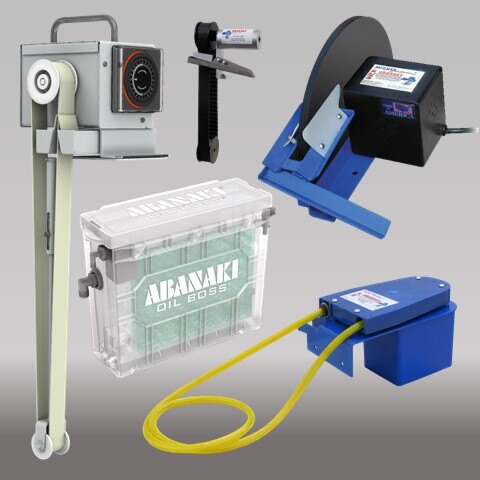
These systems use a floating tube made of oil-attracting material. The tube snakes across the liquid surface, collecting oil, which is then removed by a drive system and scraped off into a container.
Best for: Irregularly shaped tanks or areas with floating debris.
Disk skimmers use a rotating disk partially submerged in the liquid. Oil adheres to the disk’s surface and is removed by wipers as it spins.
Best for: Shallow tanks or open-top containers with limited surface area.
These are similar to disk skimmers but use a rotating drum or barrel instead of a flat disk. They typically offer a higher oil removal capacity.
Best for: Industrial wastewater treatment, large tanks.
A weir skimmer uses a floating intake that allows surface oil to flow over a weir (a barrier or lip) into a collection chamber. These skimmers rely on gravity and are useful when large volumes of oil need to be collected quickly.
Best for: Oil spill response, stormwater basins, and retention ponds.
Common Applications of Oil Skimmers
Oil skimmers are used across a wide range of industries and environmental settings, including:
How to Choose the Right Oil Skimmer
Selecting the correct oil skimmer involves several key considerations:
Consulting with an expert or supplier can help you choose the right model based on your specific operating conditions.
Oil skimmers may seem like a small component in a large industrial process, but their impact is significant. They reduce operational costs, extend equipment life, enhance safety, and ensure environmental compliance — all by doing one simple thing very effectively: removing oil from liquid surfaces.
Whether you’re running a small machine shop or managing a large-scale facility, integrating the right oil skimmer can lead to cleaner systems, more efficient processes, and a healthier environment.
Need help selecting the best oil skimmer for your application?
Feel free to reach out — we can walk you through the options based on your exact needs.
To learn more about oil skimmers, please contact our experts at 440-543-7400 or visit our website: www.abanaki.com
Read more
Exploring the Depths Between Belt Skimmers and Tube Skimmers for Effective Oil Removal | Abanaki
In the ever-evolving landscape of tramp oil contamination, the choice between belt skimmers and tube skimmers has sparked ongoing debates, with advocates on each side passionately championing the merits of their preferred technology. Belt skimmer enthusiasts extol the virtues of space efficiency, while tube skimmer proponents emphasize the broader coverage these devices offer over sump, tank or pit surfaces.
Understanding the Operating Principle
Despite the spirited discourse, both belt skimmers and tube skimmers share a common operating principle – breaking the surface tension of water to facilitate the adherence of oil to either the rotating belt or the floating tube. Recognizing this commonality is essential, as it underscores the need to align your choice with the specific requirements of your application.
Check out our Oil Skimming Guide to learn more.
Key Features and Advantages of Belt Skimmers
Belt skimmers exhibit a range of features that contribute to their widespread use and appeal.
Key Features and Advantages of Tube Skimmers
Tube skimmers, operating on a different principle, offer unique features that make them particularly effective in specific contexts.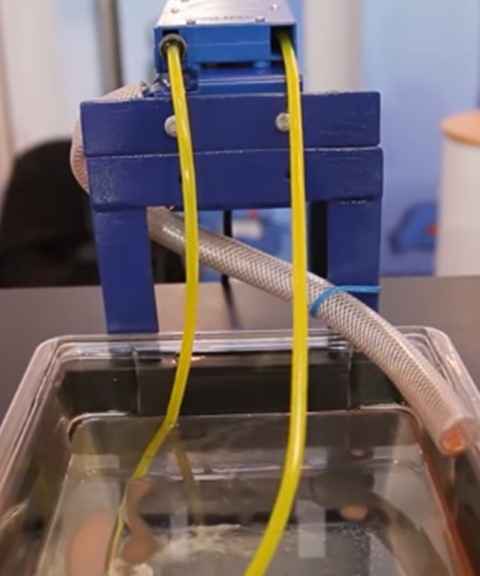
Decision-Making Considerations
Now, let’s delve deeper into the practical considerations that should guide your decision-making process.
In the ongoing belt skimmer versus tube skimmer debate, the crux lies in aligning your choice with the practical needs of your application. By carefully scrutinizing factors such as oil removal rate and tank dimensions, you can tailor your selection to seamlessly address the unique challenges presented by your environmental context. Informed decision-making remains the key to implementing efficient oil cleanup solutions that not only conserve space but also enhance functionality, ultimately contributing to a cleaner and more resilient environment.
How to Choose an Oil Skimmer for Machine Coolant
To learn more about oil skimmers, please contact our experts at 440-543-7400 or visit our website: www.abanaki.com
Read more
How Common Oil Skimmers Empower Machine Tools | Abanaki
Types of Oil Skimmers
Benefits of Oil Skimmers for Machine Tools
How to Choose an Oil Skimmer for Machine Coolant
To learn more about oil skimmers, please contact our experts at 440-543-7400 or visit our website: www.abanaki.com
You are just one step away from downloading Abanaki’s most detailed resource on our oil skimming equipment. Simply click at the button to get your ultimate guide now.
{{cta(‘7a3c62bb-85db-4bee-83fc-799ead070e4d’,’justifycenter’)}}
Read more
Enhancing CNC Machine Performance with Oil Skimmers | Abanaki
Check out our Oil Skimming Guide to learn more.
What is an Oil Skimmer?
An oil skimmer is a mechanical device designed to remove unwanted oils, grease, and other hydrophobic liquids from the surface of coolant or wastewater. In the context of CNC machines, oil skimmers are used to remove cutting oils and coolants that accumulate on the surface of the coolant reservoir. By doing so, they help maintain the quality of the coolant, extend tool life, improve machining precision, and contribute to a cleaner and safer working environment.
How Do CNC Machine Oil Skimmers Work?
Benefits of CNC Machine Oil Skimmers
CNC machine oil skimmers are valuable tools for maintaining the performance and longevity of CNC machines. By efficiently removing unwanted oils and grease from coolant reservoirs, they contribute to cleaner, more precise, and more environmentally friendly machining operations. If you’re looking to optimize your CNC machining processes, consider the integration of an oil skimmer to ensure your machines operate at their best while minimizing operational costs and environmental impact.
How to Successfully Implement Oil Skimmers
To learn more about oil skimmers, please contact our experts at 440-543-7400 or visit our website: www.abanaki.com
You are just one step away from downloading Abanaki’s most detailed resource on our oil skimming equipment. Simply click at the button to get your ultimate guide now.
{{cta(‘7a3c62bb-85db-4bee-83fc-799ead070e4d’,’justifycenter’)}}
Read more
Small Tube Skimmers, Big Problem Solvers in Machining Centers | Abanaki
Tramp oil represents a formidable challenge for modern machining centers, and its repercussions extend far beyond the confines of the workshop floor. This insidious contaminant can mar the very appearance of finished parts, tarnishing the precision and quality that machining processes strive to achieve.
Moreover, tramp oil poses a dual threat to the well-being of workers; not only can it lead to skin conditions through prolonged exposure, but it can also permeate the workspace with a haze of smoke, creating a hazardous environmental atmosphere. This issue is compounded by a significant shift in the design of machining centers in recent years, which often feature limited access to the coolant sumps, making the effective removal of tramp oil a daunting dilemma that demands innovative solutions to maintain both productivity and worker safety.
The conundrum lies in the question: how can one efficiently extract oil from a coolant sump when access is severely restricted? This challenge underscores the pressing need for ingenious methods and specialized equipment tailored to these modern machining environments.
Abanaki Small Tube Skimmer
Indeed, a small tube skimmer, such as Abanaki’s Tubetastic!®, holds promise as an ideal solution for this predicament. Its compact design and versatility make it well-suited to effectively remove tramp oil from coolant sumps, even in machining centers with limited access.
The Tubetastic! features an oleophilic tube that carefully navigates into your machining center, skillfully extracting oil from the coolant’s surface. It offers versatile installation options, allowing attachment to the tank lip or seamless entry through a slot in the machine’s side. Moreover, it boasts an impressive oil removal capacity, with the ability to eliminate as much as 1.5 gallons per hour (gph) of oil from the cutting fluid’s surface, making it well-equipped to tackle virtually any tramp oil issue.
This efficient machine also incorporates a 50/60hz fan-cooled, continuous-duty motor, available in both 110v and 220v options, ensuring reliable and consistent performance. Additionally, it is equipped with standard collector tubes that offer reaches of 8 inches, 12 inches, 18 inches, or 24 inches, with the possibility of extending the length for specific needs.
How to Select the Best Quality Tube Oil Skimmers
To learn more about oil skimmers, please contact our experts at 440-543-7400 or visit our website: www.abanaki.com
You are just one step away from downloading Abanaki’s most detailed resource on our oil skimming equipment. Simply click at the button to get your ultimate guide now.
{{cta(‘7a3c62bb-85db-4bee-83fc-799ead070e4d’,’justifycenter’)}}
Read more
Implementation of Oil Concentrator Yields Savings in Disposal Expenditure | Abanaki
The Oil Concentrator operates without any reliance on electrical components or moving parts, simplifying its design and maintenance. Its functioning is straightforward: it directly receives liquid from the skimmer. The fundamental principle at play is gravity separation. To facilitate effective separation, the Concentrator tank is sized in a manner that allows sufficient duration for the oil and water to naturally segregate.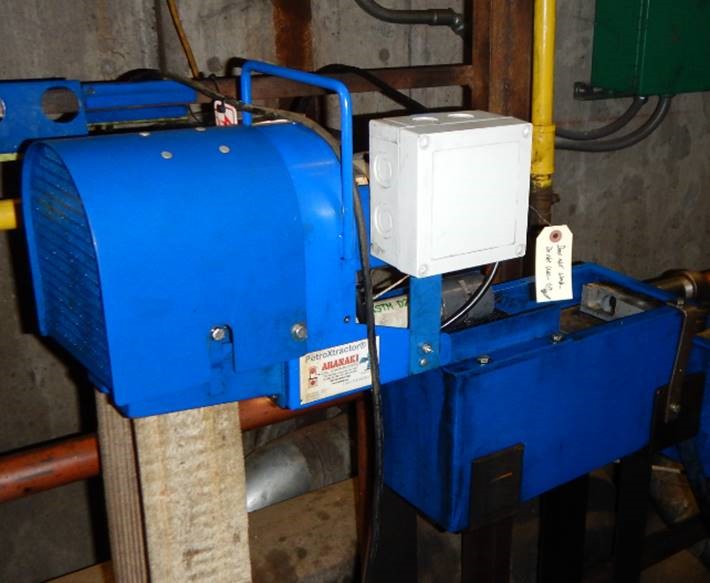
When it comes to discharging the liquids, the process is neatly organized. Water is released via a tube positioned with an open end close to the lower section of the Concentrator, whereas oil is directed through a separate drain outlet located near the upper part. As fresh liquid enters the Concentrator, the already separated water and oil are compelled to exit through their designated discharge tubes and ports. Enhancing this process, a sludge screen contributes additional dwell time, furthering the separation process. Importantly, this screen also acts as a safeguard, preventing any debris from compromising the quality of either the separated water or oil streams.
The Abanaki Oil Concentrator
The Abanaki Oil Concentrator plays a dual role, acting as a highly efficient oil-water separator capable of managing the recycling or responsible disposal of either liquid. In most operational scenarios, Abanaki skimmers excel at retrieving oil while leaving behind minimal traces of water. Nonetheless, as surface oil diminishes to a fine layer, measuring just 1/16 of an inch or even thinner, an increased amount of water or coolant might inadvertently get collected alongside the oil.
To tackle this situation, the Oil Concentrator collaborates seamlessly with an oil skimmer, offering a conclusive phase of separation. The outcome is twofold: it provides water or coolant that can be channeled back into the recycling process, and it yields oil that is nearly devoid of water, rendering it suitable for efficient disposal.Installed at the discharge end of the oil skimmer, this oil water separator comes complete with mounting bracket, removable sludge screen and drain plug for easy cleaning. An optional thermostatically controlled heater is available for use with thick oils, or when the application is in freezing temperatures. (A heater should not be used in environments where explosive fumes might be present.)
Abanaki highly recommends pairing the Oil Concentrator with all belt oil skimmers for optimal outcomes. This combination greatly boosts skimming efficiency and also brings down the costs linked with oil disposal. This partnership doesn’t just improve equipment performance – it saves money too. The Oil Concentrator refines the oil-water mix, making the separated oil purer and easier to dispose of. This reduces the expenses associated with disposal and supports eco-friendly practices. In essence, Abanaki’s suggestion to use the Oil Concentrator with belt oil skimmers is a smart way to work smarter, cut costs, and be environmentally responsible.
How to Successfully Implement Oil Skimmers
To learn more about oil skimmers, please contact our experts at 440-543-7400 or visit our website: www.abanaki.com
You are just one step away from downloading Abanaki’s most detailed resource on our oil skimming equipment. Simply click at the button to get your ultimate guide now.
{{cta(‘7a3c62bb-85db-4bee-83fc-799ead070e4d’,’justifycenter’)}}
Read more