
Abanaki Corporation Oil Skimming Division
17387 Munn Road
Chagrin Falls, OH 44023
Phone: (440) 543-7400
Email: skimmers@abanaki.com
Fax: (440) 543-7404
ISO 9001:2015 Certified Company
Terms and Conditions

Abanaki Corporation Oil Skimming Division
17387 Munn Road
Chagrin Falls, OH 44023
Phone: (440) 543-7400
Email: skimmers@abanaki.com
Fax: (440) 543-7404
ISO 9001:2015 Certified Company
Terms and Conditions
How to Choose an Oil Skimmer for Machine Coolant | Abanaki
Choosing the right oil skimmer for machine coolant involves considering several factors to ensure that the skimmer is effective and efficient in removing oil and other contaminants from the coolant. Here are some steps to follow when choosing an oil skimmer for machine coolant: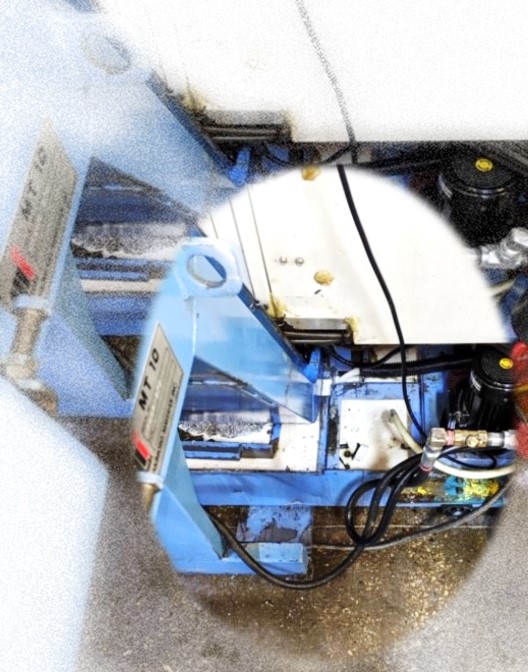
By following these steps, you can choose an oil skimmer for machine coolant that is effective, efficient, and customized to meet the specific needs of your application.
How Do Industrial Belt Oil Skimmers Work?
To learn more about oil skimmers, please contact our experts at 440-543-7400 or visit our website: www.abanaki.com
You are just one step away from downloading Abanaki’s most detailed resource on our oil skimming equipment. Simply click at the button to get your ultimate guide now.
{{cta(‘7a3c62bb-85db-4bee-83fc-799ead070e4d’,’justifycenter’)}}
Read more
How To Identify a High-Quality Belt Oil Skimmer | Abanaki
Choosing a high-quality belt oil skimmer for removing tramp oil from machine tool coolant is challenging.
Belt oil skimmers use an endless belt of corrosion resistant steel or synthetic medium, which is lowered into the tank or vessel to be skimmed. The belt passes through resilient wiper blades where the oil is removed from both sides of the medium.
Despite many belt oil skimmers looking similar, quality and versatility can vary. This video shows what to look for.
How Do Belt Oil Skimmers Work?
Belt oil skimmers utilize the differing specific gravities between oil and coolant/water to remove tramp oils. A motor driven belt that is typically constructed of an oleophilic, or oil attractant material, is placed into a coolant sump or reservoir. As the belt moves through the coolant, it attracts tramp oils. The oil is scraped off by a wiper and deposited into a container.
Belt oil skimmers provide a simple, dependable and cost-effective method for removing oil, grease and other hydrocarbons from water.
Check out our Oil Skimming Guide to learn more.
Mighty-Mini Belt Oil Skimmer
Belt oil skimmers can really help in extending the life of your costly coolant. Belt oil skimmers help remove oils that leak from machines or parts to keep your coolant clean. By removing the oil with coolant skimmer, you can significantly increase the life of your coolant.
The stainless-steel Mighty Mini is a compact belt oil skimmer designed for parts washers and machine tool coolant sumps. With its large discharge trough and small operating space, the Mighty Mini fits almost anywhere.
The stainless-steel construction resists rust and corrosion in harsh environments. It is lightweight and requires minimal assembly. With its durable stainless-steel construction, it is built to give long lasting performance. The removable trough makes cleanup fast and easy.
To learn more about oil skimmers, please contact our experts at 440-543-7400 or visit our website: www.abanaki.com
You are just one step away from downloading Abanaki’s most detailed resource on our oil skimming equipment. Simply click at the button to get your ultimate guide now.
{{cta(‘f4255185-2eab-4601-8d54-ba4ba83a951f’)}}
Read more
Industrial Wastewater Skimmers for Steel Mills | Abanaki
Grease Grabber Oil Skimmer
How Grease Skimmer Works?
Using a double drive roller and tail pulley system, the grease skimmer belt runs through wastewater to pick up grease and heavy oil from the surface. The belt travels over the head pulley and then passes through tandem wiper blades, from which oil is scraped off both sides and discharged. A heated hopper keeps grease flowing in cold outdoor temperatures.
The tail pulley features flanges that allow the pulley to roll freely on the inside of the belt without becoming dislodged in turbulent applications. No bearings are needed; the unit does not need to be fastened to the tank. An optional tether and cage assembly is offered to prevent the tail pulley from being dislodged. The Grease Grabber oil skimmer can be used in pits with depths as shallow as one foot or as deep as 100 feet.
To learn more about oil skimmers, please contact our experts at 440-543-7400 or visit our website: www.abanaki.com
Abanaki Model 8 Belt Skimmer in Operation
Read more
Belt Oil Skimmers are Made for Groundwater Remediation | Abanaki
Sometimes, an important technological advance begins with a small step-back! Such is the case with remediation of hydrocarbons from groundwater utilizing existing recovery and monitoring wells.
For the past few years, state government has based decisions on the amount of clean up that they require by the risk posed to the environment. Risk Based Corrective Action, commonly called “Rebecca” (RBCA), is a process that utilizes the principles of exposure assessment, toxicity and mobility to make corrective action decisions on sites that are cost effective while still protecting human health as well as that of the environment. Many times, all they require is removal of the free-phase product, allowing any emulsified contaminant to degrade with time. RBCA has saved many millions of dollars both for taxpayers and for businesses. With state regulatory agencies taking this approach, oil skimming devices have emerged as one of the most cost-effective groundwater remediation equipment choices.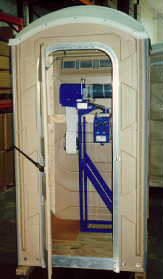
Oil Skimmer is the Solution in Groundwater Remediation
Wastewater engineers in industrial settings have, for many years, understood the value of oil skimmers in the removal of hydrocarbons from water. Food processing plants, the metals industry, machining firms and utilities have all used oil skimmers with great success for wastewater treatment. Recently, oil skimmer manufacturers have modified their product as groundwater remediation equipment. The belt oil skimmer’s ability to get into tight spaces and remove relatively large amounts of hydrocarbons lends itself perfectly to groundwater remediation.
Since most oils, fuels and other hydrocarbon liquids have the tendency to float on water, oil skimmers are designed to remove only the top, free-phase, product layer. With only product being removed, the cost and maintenance of other down-well and water treatment equipment can be eliminated. Another cost advantage to oil skimming is that in many cases the product can be salvaged for reuse – further reducing the overall price by eliminating the disposal cost.
Belt Oil Skimmers are the Most Cost-Effective Method
The options for remediation equipment through recovery wells are practically unlimited since these wells come in a variety of sizes; any of the available technologies such as pump and treat of bio-remediation can be used in the correct size recovery well. Monitoring wells, however, are small, typically less than 4 inches in diameter. Initially installed for the monitoring of groundwater they are cheaper to construct and just large enough to allow a baling device or oil/water interface detector to pass through. As a cost savings measure, these small diameter wells are increasingly being used for product removal. With the increase in this new use, it is only natural that a number of devices are showing up claiming the ability to remove product through monitoring wells.
With the requirements for groundwater remediation systems becoming more reasonable, the use of skimming devices in lieu of pump and treat systems is increasing. The enormous expense involved with treating millions of gallons of water including the remediation equipment, monitoring and related maintenance is being replaced with a much more common-sense attitude. Oil skimmers, especially belt oil skimmers, as a means of remediation equipment, not only meet the challenge but, most times exceed. Pump and treat still has a place in this industry, but the small step “backward” to time proven skimming, a more reasonable and cost-effective method, cannot be overlooked.
To learn more about oil skimmers, please contact our experts at 440-543-7400 or visit our website: www.abanaki.com
How Does a Well Oil Skimmer Work?
Read more
5 Simple Yet Crucial Steps to Choosing an Oil Skimmer | Abanaki
Choosing an oil skimmer best suited for your application will maximize oil removal while minimizing capital outlay and oil skimmer operating costs. There are 5 crucial steps that need to be considered when purchasing a skimmer for your application. Skipping one or any of these concepts can result in having zero success in removing oil from your waste water. So, let’s keep that from happening and go over these 5 simple steps!
Operating Conditions
The first step in choosing an oil skimmer is to define the operating conditions in which the skimmer will be operating. All oil skimmers have a moving medium, and possibly other parts, immersed in the liquid. The performance and life of the pick-up medium, wiper blades, pulleys, etc. are affected by different conditions. These conditions include temperatures in and out of the liquid, pH of the solution, and the presence of solvents or other reactive chemicals.
Removal Capacity
The second step in selecting an oil skimmer is to know what you need or expect your removal capacity to be. Capacity should be based on the maximum amount of oil to be removed within the shortest available time. For instance, total oil influx may be 200 gallons in a 24-hour period, which averages about 8.3 gallons per hour. But if most of it comes during a single eight-hour plant shift, you will probably need a removal rate that is three times as high, especially if you are trying to prevent an unwanted discharge of contaminated water to a sewer system. As a rule-of-thumb, specify approximately twice the maximum capacity you anticipate needing for normal conditions.
Sump’s Characteristics
Understanding your tank or sump’s characteristics is the third thing you will want to consider when choosing an oil skimmer for your process. The location, shape, and capacity of a tank or water impoundment are major factors in choosing the right oil skimmer. Also consider fluctuations in water level, turbulence and possible emulsions. Although oil skimmers do not cause emulsions, they can have trouble removing certain types.
Oil Skimmer Media
The next step is determining which belt, tube, or disk to select for your skimmer. Obviously, you need the proper media on your skimmer in order to ensure the best results. And if you think all belt types or materials operate the same or that simply picking the cheapest option will suffice, you’re wrong and you’d be setting yourself up for failure. You can have a skimmer that is top of the line, but if you have the wrong belt, tube, or disc material on it then it won’t matter how great of a skimmer you have in that tank. Your results will be less than stellar.
Belt performance and durability depends on the nature of the liquid, its chemical composition, temperature, etc. For instance, high temperature increases a belt’s sensitivity to pH levels. So if the temperature of your application is above 160°F and you’re thinking of using a Polymer belt, then I would suggest you think again. It’s always best to share your application’s temp and pH levels with your sales person so they can select the right belt material for you.
In the same vein, choosing the right wiper blade is important, too. You’ll want something that can endure the temperatures and pH levels of your application so they don’t melt or warp or completely break during operation.
Oil Skimmer Accessories
Accessories are a skimmer’s best friend! Or so they say. The fifth step in choosing an oil skimmer is determining if your application requires any additional add-ons, such as specific motor types or additional skimmer equipment. Most oil skimmers are designed with standard, industrially rated, continuous duty motors and fully enclosed speed reducing drives. Most of these oil skimmers can be specified with the following motor options:
– Any standard or exceptional electrical requirement
– Explosion proof
– Drip proof
– Tropicalized
– Dirty duty
– Food service
– Wash down duty
– DC motors
– ATEX/European motors
Oil skimmer accessories make it easy to customize your oil skimming system for quick installation and optimal performance. These are the most commonly requested items. More specialized accessories are typically available on request such as solar oil skimming system, transfer package and underground oil skimmer system, concentrators, fluid monitoring accessories, and many more.
Choosing the right oil skimmer doesn’t have to be a disastrous process, but things can go sideways quickly if you don’t address certain aspects of your application. As always, make sure you are dealing with a reputable vendor. Companies that really know and understand how oil skimmers work will ask you all about the content above, if they don’t, RUN! Bottom line: know your application, choose a vendor you trust, and your oil skimming operation will be smooth sailing.
Video: How To Tell What Skimmer You Need For Your Machine Coolant
To learn more about oil skimmers, please contact our experts at 440-543-7400 or visit our website: www.abanaki.com
There is a skimming system for virtually any application. Simply fill up the form to your right or click at the button to get your ultimate guide now.
{{cta(‘a096ad02-3452-44df-8fb6-1434b25367a5’)}}
Read more
Extend Coolant Life with Cost-Effective Coolant Skimmers | Abanaki
A coolant skimmer is a machine that removes floating oil and grease from liquid. The floating oil adheres to skimming media, such as a belt, tube, or disk. The media then runs back to the machine to be wiped clean.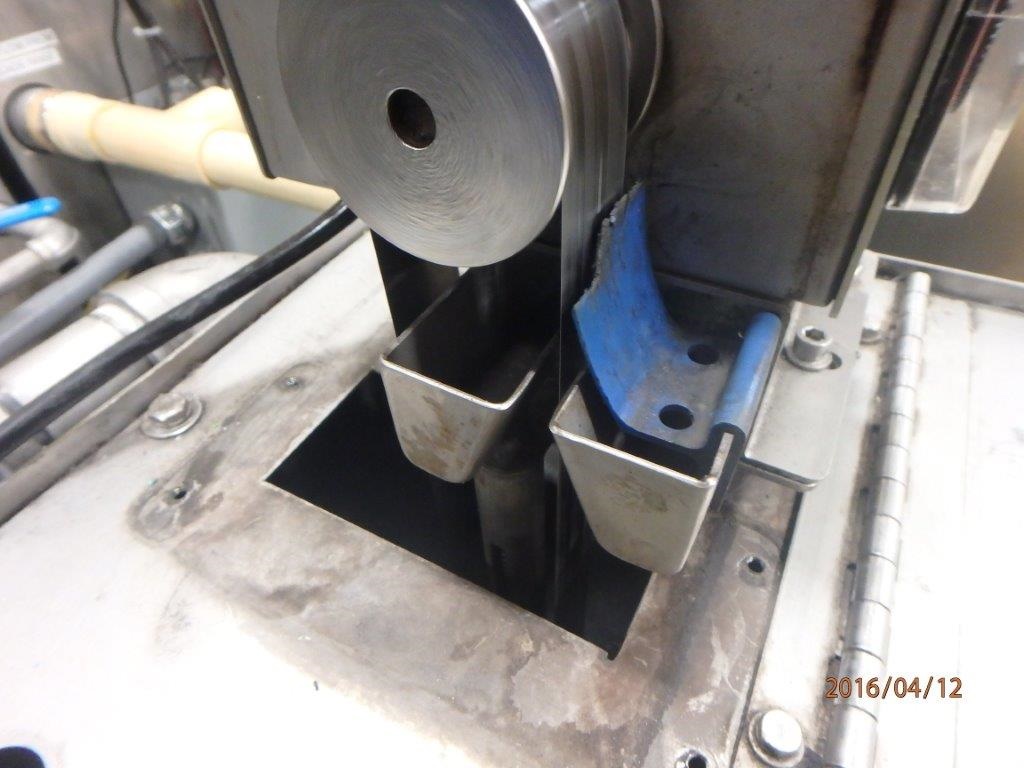
Coolant skimmers are simple, dependable and effective tools for removing oil, grease and other hydrocarbons from water and coolants. Often, a coolant skimmer by itself can achieve the desired level of water purity.
In more demanding situations, coolant skimming is a cost-effective means of removing most of the oil before using more complicated and costly treatments such as coalescers, membrane filters and chemical processes.
Coolants And Cutting Fluids
When machine coolants become contaminated with tramp oils, four things usually occur:
Oil skimmers that remove tramp oils solve these problems and typically pay for themselves within a few months. Therefore, these are the coolant skimmers you should remember to extend the life of your coolant.
Oil Boss (New Generation Oil Skimmer)
Abanaki’s Oil Boss is an innovative tool for keeping coolant free of oil. The patent-pending design allows for easy visual inspection of your coolant’s condition; and will also help extend tool and coolant life. It will decrease loss of production and maintenance time. And it will allow for easy cleaning of various sumps or tanks around any plant or shop due to its portability and magnetic base. The Oil Boss has a small footprint that reduces the amount of clutter and equipment on the shop floor.
Mighty Disk (Disk oil Skimmer)
Mighty Disk is the inexpensive way to remove unwanted tramp oils from coolants and parts washers, but with all the quality that you expect from Abanaki! Removes up to 1 ½ gallons of oil or more of medium weight oil per hour. Use it almost anywhere a flat surface is available for mounting. Weighs less than 10 pounds, installs in no time, and runs on 110v power.
TubeTastic (Tube Oil Skimmer)
The Abanaki TubeTastic! oil skimmer can be used on machining centers with little or no access to the coolant sump from above. This unit can skim oil from chip conveyors or even totally enclosed machining centers. The TubeTastic! can be easily mounted on the side of virtually any machining center coolant sump. By use of an existing opening or by making a small access cutout, the collector tube runs through the surface of the coolant and collects the unwanted oils. The oil then flows out the discharge tube into any waste oil container for easy disposal.
Mighty Mini (Belt Oil Skimmer)
The stainless steel Mighty Mini is a compact belt skimmer designed for parts washers and machine tool coolant sumps. With its large discharge trough and small operating space, the Mighty Mini fits almost anywhere. The stainless steel construction resists rust and corrosion in harsh environments. It is lightweight and requires minimal assembly. With its durable stainless steel construction, it is built to give long lasting performance. The removable trough makes cleanup fast and easy.
To learn more about oil skimmers, please contact our experts at 440-543-7400 or visit our website: www.abanaki.com
HOW TO TELL WHAT SKIMMER YOU NEED FOR YOUR MACHINE COOLANT
Have you ever looked at your coolant and wondered what type skimmer would work best in your machine sump? In this video, we talk about what oil skimmer works well in various coolant applications.
Read more