
Abanaki Corporation Oil Skimming Division
17387 Munn Road
Chagrin Falls, OH 44023
Phone: (440) 543-7400
Email: skimmers@abanaki.com
Fax: (440) 543-7404
ISO 9001:2015 Certified Company
Terms and Conditions

Abanaki Corporation Oil Skimming Division
17387 Munn Road
Chagrin Falls, OH 44023
Phone: (440) 543-7400
Email: skimmers@abanaki.com
Fax: (440) 543-7404
ISO 9001:2015 Certified Company
Terms and Conditions
Why is Coolant Maintenance Important? | Abanaki
Coolant maintenance should always be a top priority in shops. Dirty machine coolant can cause a multitude of problems for manufacturing facilities and CNC machines. Not using clean coolant can cause health issues in the workplace, reduce the life of the equipment used, and can significantly slow a process down.
All of these factors lead to loss in production which leads to loss in profit for companies. And while recycling steel, aluminum, paper, and glass is readily accessible, recycling coolant is not. Additionally, the cost of recycling used coolant can be very expensive.
Is Coolant Maintenance necessary
Companies look for effective ways to remove oil from water or coolant to reduce costs and the liability of proper disposal. Another reason for removing the oil is a better work environment. Letting oil remain in the coolant tank allows anaerobic bacteria to grow. Anaerobic bacteria break down the components of coolant, causing it to need changing more frequently. Oil-laden coolant with a high anaerobic bacteria content has two other drawbacks as well.
The first drawback is an unpleasant odor caused by the bacteria. The second drawback the smoke generated from the oil-laden coolant coming in contact with the operating cutting tool. One of the easiest ways to remove hydrocarbons from water or coolant is by using a belt oil skimmer. It is a low maintenance, easy to use tool for removing oil from water or coolant.
Coolant Maintenance Solutions
There are a wide range of coolant maintenance products including oil skimmers to help keep your coolant fresh and extend its life. Does your shop smell like rotten eggs? Has the quality of your products been compromised? If so, you probably have dirty coolant to blame.
From belt oil skimmers to tube skimmers and coolescers, having the right tools and products can make keeping your coolant working properly a breeze. Putting the proper oil skimmer on your machine will cut down on the way lube and floating oils are left in your tank.
These oil skimmer units do a great job of removing the oil from your machine coolant tanks, leaving you fresh coolant to run quality production parts. There are also other products that can help in your quest, items like oil eating microbes, coolescers, and coolant deodorizers can all be added to your maintenance plan along with an oil skimmer so you can rest assured you are getting every dollar worth of your machine coolant life.
Abanaki is Here to Help
There are a multitude of oil skimmers on the market today. One of the most important things to be considered is the quality of the unit to be purchased. Points of interest should include construction materials, motor design, and the type of warranty that is offered. Is the skimmer housing made of metal or plastic? Is the motor fan-cooled? Does the motor use needle bearings or bronze bearings? How long does the warranty last and what does it cover? Most oil skimmers will perform as advertised, but remember the old adage that “you get what you pay for”.
Learn more about the cost-effective oil skimming solutions Abanaki offers by visiting www.abanaki.com. Our website offers a wide range of product info, video tutorials, detailed handbooks, and more. To speak to a representative call (440) 543-7400.
How to Successfully Implement Oil Skimmers
Read more
Model 4 Oil Skimmer Provides the Best Solution to Industrial Wastewater Treatment | Abanaki
There are many reasons why so many facilities use the Model 4 oil skimmer as part of their industrial wastewater treatment. The Model 4 oil skimmer is designed to last for many years. With the proper configuration it can handle liquid temperatures up to 212°F, and the pH of the fluid can range from 3 to 13. Belts are specifically selected for your application (see Belt Selection page). The skimmer drive includes an oil filled gear reducer with bronze gears and ball bearings. The motor, reducer, and powder coated finish of the weldments give the Model 4 exceptionally long life, even under the harshest conditions.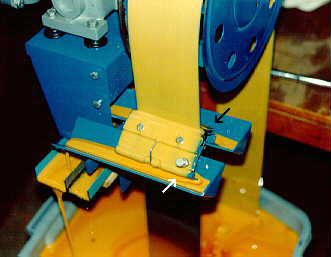
Our belt oil skimmers are used in industrial wastewater treatment applications quite frequently. An international manufacturer in the power transmission industry has been using our Model 4 belt oil skimmer as part of its manufacturing process for many years. The facility utilizes a poly belt on the Model 4 that is used in the parts washer, and it runs at roughly 140°F. The skimmer runs 8 hours a day and efficiently skims the oil out of the parts washer and helps to eliminate the company’s disposal costs.
The Oil Grabber Model 4 Belt Oil Skimmer
The Oil Grabber Model 4 Belt Oil Skimmer provides a continuously operating belt and wiper that can remove up to 20 gallons per hour. Depending on the characteristics of the liquid, it is possible for the Model 4 alone to reduce oil content to less than five parts per million in water. The unit can be used as a pretreatment before filtration, and in conjunction with coalescing systems as part of an industrial wastewater treatment plan. Reclaimed grease and oil can be re-used or used as furnace fuel, avoiding sucker truck disposal costs.
The Model 4 belt oil skimmer utilizes a continuous belt and wiper to remove up to 20 gallons of oil per hour from the fluid surface. The belt, operating on a motor and pulley system, runs through contaminated liquid to pick up oil from the surface.
After traveling over the head pulley, the belt passes through tandem wiper blades where oil is scraped off both sides of the belt and discharged. The tail pulley has flanges which allow it to roll freely on the inside of the belt without becoming dislodged. It requires no bearings and does not need to be fastened to the tank. If turbulent conditions exist, an optional tether and cage assembly prevents the tail pulley from being dislodged.
Oil Skimmers Get the Dirty Jobs Done
To learn more about oil skimmers, please contact our experts at 440-543-7400 or visit our website: www.abanaki.com
Read more
Under-Sizing Your Oil Skimmer? | Abanaki
A common misconception is that you can buy a smaller skimmer based on gallons-per-hour skimming capacity for a big job to save money. However, purchasing a small or mini unit instead of an industrial sized skimmer can be an ineffective method of oil skimming.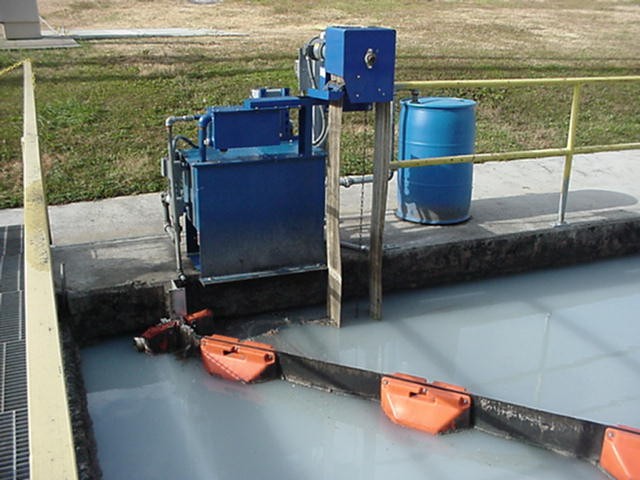
Oil Skimmers Selected by Size of the Area
Oil skimmers should be selected by the size of the area that needs to be skimmed, not just by the amount of oil needing to be removed. Choosing an oil skimmer that has the capacity to remove at least 2 times the capacity needed by the application should be the deciding factor.
Oil Skimmer Capacities
Oil skimmer capacities are based on optimum conditions and homogeneity of oil. Viscosity, temperature of the water, and other factors can affect the amount of oil picked up by an oil skimmer. It is impossible to accurately predict how fast your oil will be picked up. Therefore, as a rule of thumb, purchase an oil skimmer that is rated at least twice the capacity needed.
Make the Right Decision
Paying a cheap price up front might result in you paying more in the long run. It’s best to invest in a quality skimmer that is from a reputable vendor from the start. Oil skimmers are simple in design, but you will still be better off with a skimmer that is manufactured with the highest quality. It will operate efficiently and consistently for a longer period of time. Removing oil from water is a necessary practice in most industrial applications. Spend your money wisely to get the job done right.
Remember…
Selecting an oil skimmer can be a complex decision-making process. There are various factors you have to consider about your application when choosing the right skimmer. Abanaki oil skimmers are durable and built to last, even in harsh applications. They have been proven in thousands of applications and are an environmental solution to unwanted oil in water. Abanaki sales reps have a vast knowledge on a wide variety of industrial applications. They are always available for phone calls, emails, or on-site consultations to help you find the right skimmer for your application.
Oil Skimmers Get the Dirty Jobs Done
To learn more about oil skimmers, please contact our experts at 440-543-7400 or visit our website: www.abanaki.com
Read more
5 Other Options to Consider for Oil Skimmer | Abanaki
A typical industrial oil skimmer will offer units in single or triple phase. When you need more performance, Abanaki specialized motors run our Oil Grabber oil skimmer in most environments:
Read more
11 Easy Tips for Getting the Most Out of Your Oil Skimmer | Abanaki
Oil skimmers keep oil out of places it does not belong. Whether this means keeping oil out of coolant to extend tool life, or keeping oil out of wastewater so it isn’t discharged into the environment, a properly functioning skimmer can save you a lagoon full of dollars. Here are the 11 easy tips to skim oil from water or coolant.
Abanaki has emerged as the world leader in oil skimming solutions, serving industries as diverse as iron and steel, wastewater, paper, food processing, automotive, environmental remediation and recycling. With a guiding principle that has become a corporate motto, “Clean Our World” is the philosophy we have in mind when servicing our customers. If you have any questions about your oil skimming application, please call us at 440-543-7400. We are here to help!
Oil Skimmers Get the Dirty Jobs Done
To learn more about oil skimmers, please contact our experts at 440-543-7400 or visit our website: www.abanaki.com
Read more
Tube Oil Skimmer is Perfect Solution for Shallow Applications | Abanaki
Tube oil skimmer can be used in wastewater applications that are shallow in depth. Plus, tube oil skimmer is a great fit where a belt skimmer is too big.
The Abanaki Oil Viper tube oil skimmer
The Abanaki Oil Viper tube oil skimmer is a surface oil skimmer that effectively removes floating oils by means of an oleophilic (oil attracting) ¾-inch diameter continuous looped tube. Due to the sleek design of the Oil Viper tube oil skimmer, it can skim in just inches of water compared to a belt skimmer which could need one to two feet of water to skim from.
The Oil Viper tube oil skimmer works off the same principle of the belt skimmer, the tube breaks the surface tension of the water, the oil is then collected and skimmed off by its unique wipe clean design. Two tube materials are available, the standard tube is great in a wide variety of applications; the high temperature tube is best suited for high temperature or caustic applications.
Oil Viper tube oil skimmer features:
Where to Use the Oil Viper?
The Oil Viper is a compact, versatile Abanaki skimmer. Its size and removal capacity make it suitable for most applications. From a mere shimmer on top of water to a heavy oil slick, the Oil Viper performs efficiently, removing up to 100 gallons of oil per hour.
Typical Applications:
Rugged Construction for Harsh Conditions
The Oil Viper is designed to last for many years. With the proper configuration it can handle liquid temperatures up to 212°F, and the pH of the fluid can range from 3 to 13. The skimmer drive includes an oil filled gear reducer with bronze gears and ball bearings. The motor, gear reducer, and powder coated finish of the weldments give the Oil Viper exceptionally long life, even under the harshest conditions.
To learn more about oil skimmers, please contact our experts at 440-543-7400 or visit our website: www.abanaki.com
See the Oil Viper tube oil skimmer in action!
Read more