
Troubleshooting your Disk or Tube Skimmer
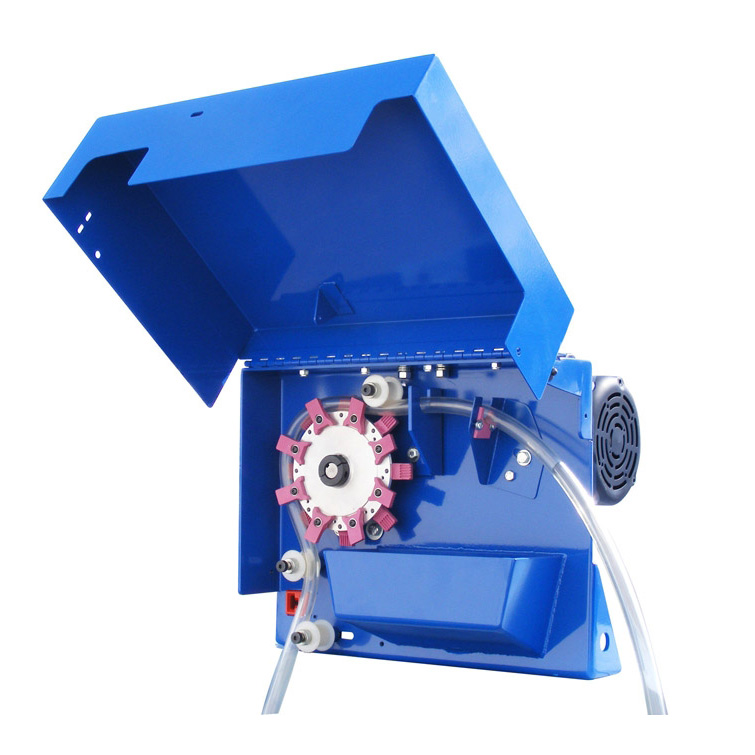
Troubleshooting Your Abanaki Coolant Maintenance Oil Skimmer: Tube and Disk Edition
As we discussed last month (you can read that blog post here if you have a belt skimmer), dealing with skimmer downtime can be extremely frustrating—you purchased the skimmer to improve some aspect of your operation, and you’re back to square one when something goes wrong. We get it. We’re here for you, which is why we’ve put together a guide for troubleshooting with your tube or disk-type skimmer. Here are some of the most common problems we see, and how you can troubleshoot to identify and solve them. Checking the unit regularly and performing routine maintenance will help keep your skimmer operating at its best over time. Things like skimming media replacement (belt, tube, disk, etc.), motor replacement, and wiper replacement should be done at the appropriate times based on your skimmer’s model and runtime requirements.
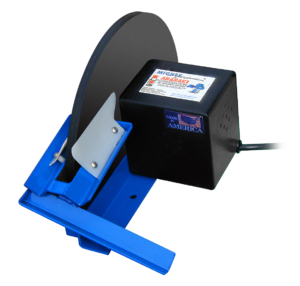
Abanaki Mighty Disk Oil Skimmer
Disk Skimmers (Mighty Disk, Cool Disk)
Disk skimmers operate by rotating disk-shaped mediums through liquid and collecting oil on the disk media, which is then scraped off by wipers and discharged. Surface tension is key. Similarly to belt skimmers, it is important to consider reach, or the amount of the disk that gets immersed in fluid, when evaluating the effectiveness of your disk skimmer. Less disk in the fluid generally equates less oil removed, so the possibility of fluctuating fluid levels can seriously inhibit a disk skimmer’s performance.
Disk skimmers need to be sized accordingly- take into account their reach into the tank, ensure that the disk is the right size for desired removal rates, and that the media is submerged at the right depth. The disk must always be penetrating the fluid to operate properly. Check that the skimmer is mounted levelly, on a stable and flat surface where the disk is submerged and close to areas where oil collects naturally.
- My disk is warping.
Application temperatures above 160 degrees may cause disk media to warp and create only intermittent contact with the wiper blades; this does not occur very often because our disks are 1/2″ thick, but if it does, we recommend switching to a belt skimmer with a belt suited for high temperature applications.
- My skimmer isn’t removing oil at the rate I expected.
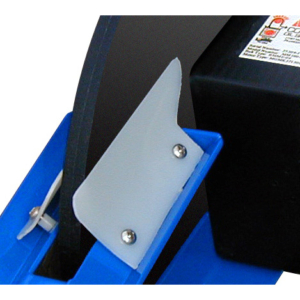
Abanaki Mighty Disk Oil Skimmer Wiper Blades Close Up
If the skimmer isn’t removing the amount of oil you expected and appears to be in working order, issues like incorrect sizing, incorrect media, or tank fluctuations could be at play. Utilizing an incompatible skimming media for your application’s requirements will inhibit the skimmer’s ability to pick up oil as intended. If your application has extreme temperatures, chemicals, or Ph levels, it’s critical to let your salesperson know so they can help you pick the best option for your application.
Examine- is there new turbulence in the tank? Fluid level fluctuations? These can prevent the disk media from accessing enough fluid to remove oil properly.
Because disk skimmers rely on reach, they should be sized based on the surface area of the tank they’re skimming, rather than the volume of oil present. We recommend going with a disk diameter large enough to reach the fluid at its lowest operational level with the proper placement for oil discharge. As a general rule, the skimmer you select should be able to handle roughly two times the required removal capacity for your application to account for any fluctuations and to ensure the machine is not overworked.
- My skimmer isn’t removing oil at the rate it used to.
If the skimmer isn’t removing oil like it used to, check for wear or warping on the disk (see above), as well as the condition of the wiper blades. Wiper blades need to be flush with the skimming media, neither too tight or too loose. Double check that the wiper blades have the appropriate amount of tension, and clean them if there is evidence of debris or grease that could be preventing a flush contact with the disk’s surface. If the wiper blades are too tight, they’ll wear very quickly, and if they’re too loose, oil will remain on the skimming media and reduce removal rates. If the wiper blades look visibly worn or ragged, it’s likely time to replace them. We recommend keeping an extra set of wiper blades on hand for quick replacement to help reduce the possibility of downtime. Factors like temperature, pH levels, and chemical concentrations may also cause wiper blades to bend away from the disk, creating oil removal issues. If this is something you’re noticing, we do have stainless steel wiper blades as a replacement option.
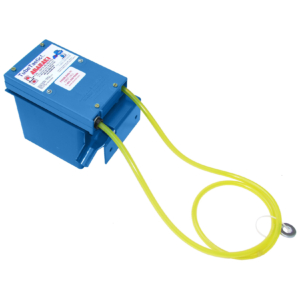
Abanaki TubeTastic Oil Skimmer
Tube Skimmers (Oil Viper, TubeTastic)
Tube skimmers are a great option for tight spaces or low-level fluid situations where a belt or disk skimmer are incompatible, and use a continuously moving, oil attracting tube to capture and discharge oil via surface tension. The tube media snakes out under the surface of the fluid to collect oil, and then the tube circles through to unique wipers surrounding the tube, with the result of a virtually oil free tube as it enters the fluid again.
Oftentimes, we see misconceptions happen with the tube length needed for this kind of skimmer—the collector tube does not float out over the surface, but sinks into the fluid sump. Ensure that your tube is not too long, as this creates a greater possibility for the tube to coil up on itself, get tangled, and cause motor issues. Measure the vertical distance from the skimmer’s mounting point down to the lowest fluid level in the tank to get the correct length.
Ensure that the tube is installed the correct way, so that the steel washer is in contact with the base of the skimmer and not the nitrile washer. If the tube is backwards, the washer will be puled into the drive cassette, stopping the drive gears and causing motor failure.
If you have a TubeTastic, please note that it is suited only for ambient applications, and that high temperatures or Ph levels can cause the tube to swell and come apart.
My skimmer isn’t picking up oil like I thought it would.
If your tube skimmer is installed correctly but not picking up the amount of oil you’d planned on, check that it’s installed in an area where oil actually collects. Additionally, ensure that the skimmer is sized correctly for the application, and that it is capable of handling twice the amount of oil you expected to remove to account for fluctuations without strain. Like other skimmers, tube configurations should be sized based on the surface area of the tank they’re skimming, not the volume of oil present. Excessive turbulence in a tank can also inhibit removal rates.
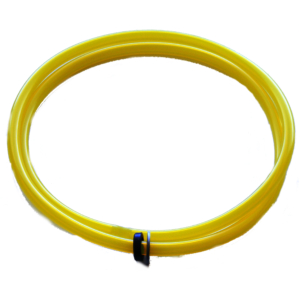
TubeTastic Oil Skimmer Replacement Tube
My skimmer isn’t picking up oil like it used to.
If you notice that your skimmer’s removal capacity is dropping, check for wear or splitting on the tube (skimming media), as well as for any debris that could be preventing the wipers from operating properly. Examine if there have been any recent changes in the environment that could affect tank level or chemical concentration.
My tube is picking up too much water or coolant.
If the skimmer is picking up too much water or coolant, consider runtime- is the skimmer running only when there is oil present in the tank, or is it running all the time? Running the skimmer when there is not oil present in the sump or tank can increase wear on the skimming media and motor, as well as increase the possibility that it collects excess water or coolant. We recommend only running the machine when there is enough oil to warrant skimming, in areas where oil collects naturally.
With all skimmers, following the assembly and maintenance directions are essential for quality, long lived operation. Please reach out to us if you have specific questions not addressed in this article—we’re happy to help.
Contact options:
Talk to a product manager/engineer
Call us at 440-543-7400
Email us at skimmers@abanaki.com