Half Sized Blog Element (Single Author Style)
Half Sized Blog Element (Multi Author Style)


Oil skimmers are simple, dependable and effective tools for removing oil, grease and other hydrocarbons from water and coolants. Often, an oil skimmer by itself can achieve the desired level of water purity.
In more demanding situations, oil skimming is a cost-effective means of removing most of the oil before using more complicated and costly treatments such as coalescers, membrane filters and chemical processes.

As with any piece of industrial equipment, there are guidelines that should be followed to promote optimal efficiency, as well as a long, trouble free operational life. Let’s take a look at a few tips that will help you get the most out your oil skimmer.
A skimmer is most effective when there is no turbulence in the media
Skimmers rely on the differences in specific gravities between oil and coolant or water that causes oil to float on top of water. In applications where turbulence is present, the process of oil rising to the top will be prolonged, with some oil remaining below the water until conditions allow gravity to ultimately prevail. Operating the skimmer predominantly during quiet times will give oil the chance to rise to surface and allow the unit to operate more effectively.
Keep a spare belt and wiper blades on hand
Being prepared for the unexpected is always good practice. While blades and belt are typically very durable and trouble free, you never want to be in a situation where the skimmer must be taken out of service until a new belt or wiper blades arrive from halfway across the country.
Choose a belt that is long enough so that the tail pulley is submerged when the liquid level is at its lowest point
Water and coolant levels can vary over time. Therefore, the skimmer needs to be capable of collecting oil when the levels are at their lowest. Taking the time to correctly size the belt prior to purchasing the unit will save a lot of headaches down the road.
Properly size the skimmer to the size of tank
Skimmers operate by breaking surface tension which allows oil to be attracted to the belt. If a unit is undersized, it will not have the strength to disrupt the surface tension of the liquid, meaning that oil will never make it to the belt. Sizing of the unit should always be based on the overall area of the tank, not the volume of oil that is expected in the tank. This will guarantee that the skimmer will be capable of overcoming the surface tension that is present for the given tank area.
To learn more about oil skimmers, please contact our experts at 440-543-7400 or visit our website: www.abanaki.com

Oil skimmers are tremendously versatile, especially when the wide range of venues where they are called upon to operate is considered. Basically, anywhere oil and water have the potential to mix presents an opportunity for a skimmer to be put to good use, keeping oil out of water or coolant so that it can be recycled, re-used, or safely discharged.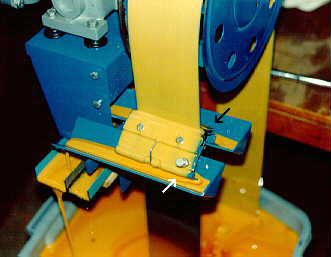
The applications where these unsung workhorses perform are numerous, with skimmers being called upon to keep oil out of the places it does not belong, such as machinery coolant, bilge tanks, and wastewater that is discharged from parking garages. While there are differences in design from one skimmer vendor to the next or variations based upon their application, all skimmers ultimately rely on the differences in specific gravity and surface tension in oil and water to allow them to attract and capture oil. A rotating disc or belt is then used to collect the oil, where it can then be recycled or reused.
Make sure the skimmer is mounted level
It is strongly recommended to take the time during the initial installation to check that the skimmer is mounted and fastened securely in an orientation that is level. This is especially critical for skimmers with free-hanging belts to ensure proper tracking over the pulleys. This will promote better performance and reduce premature wear on the belt, wipers, pulleys, and motor.
Proper positioning of wiper blades is essential
Maintaining the proper amount of tension on the wiper blades is key to optimizing skimmer performance. Striking a balance that allows the blades to contact the belt in a manner that allows them to remove the majority, if not all of the oil from the belt is ideal. Over tightened wiper blades will cause premature wear on blades. Under-tightening leads to poor recovery results, as the oil collected by the belt is not fully removed as the belt passes over the wipers.
Run the skimmer when oil is present
While this may seem like a rather obvious point, running a skimmer constantly may actually be counterproductive, because it increases the likelihood that coolant or water will be picked up by the belt. A timer or an oil in water sensor can be employed to optimize skimmer operating efficiency by controlling the times when the unit is running.
To learn more about oil skimmers, please contact our experts at 440-543-7400 or visit our website: www.abanaki.com

Abanaki Corporation Oil Skimming Division
17387 Munn Road
Chagrin Falls, OH 44023
Phone: (440) 543-7400
Email: skimmers@abanaki.com
Fax: (440) 543-7404
ISO 9001:2015 Certified Company
Terms and Conditions
Tips for Effective Oil Skimming – Part 2 | Abanaki
Tips for Effective Oil Skimming – Part 2
Tips for Effective Oil Skimming – Part 1 | Abanaki
Tips for Effective Oil Skimming – Part 1