
Abanaki Corporation Oil Skimming Division
17387 Munn Road
Chagrin Falls, OH 44023
Phone: (440) 543-7400
Email: skimmers@abanaki.com
Fax: (440) 543-7404
ISO 9001:2015 Certified Company
Terms and Conditions

Abanaki Corporation Oil Skimming Division
17387 Munn Road
Chagrin Falls, OH 44023
Phone: (440) 543-7400
Email: skimmers@abanaki.com
Fax: (440) 543-7404
ISO 9001:2015 Certified Company
Terms and Conditions
11 Characteristics that define Oil Skimming Application | Abanaki
Operating Conditions
The performance and life of the pick-up medium, wiper blades, pulleys, etc. are affected by operating conditions. These include temperatures in and out of the liquid, the pH of the solution and the presence of solvents or other reactive chemicals.
Hazardous Materials
Applications involving flammable materials or explosive vapors require the use of explosion-proof (or air-driven) motors and controls.
Temperature/Viscosity
All oil skimmers require floating oil to be in a liquid, free flowing state. If the oil congeals or solidifies at ambient temperatures, the reservoir and/or skimmer will require heaters to maintain fluid flow.
Removal Rate
Skimmer removal rates, expressed in gph, vary with oil viscosity. Typically, manufacturers rate skimmers using SAE 30 weight motor oil at 65 degrees Fahrenheit (18 degrees Celsius). It’s wise to ask for test data, especially if your application involves a much different viscosity.
Skimmed Water Content
All oil skimmers pick up some water with the oil. Suction skimmers pick up more water than other types. High water content increases oil recycling and disposal costs. Generally, the ratio of water to oil decreases with thicker films of floating oil and slower moving pick-up media.
Residual Oil
A skimmer removes oil as long as it is present. Depending on oil influx rate and the skimmer’s removal rate, residual oil in the water may be as low as a few parts per million.
Portability
In some plants mobile equipment service shops and at remediation sites, a portable oil skimmer can sometimes service multiple machines, sumps or wells.
Tank or Sump Characteristics
The location, shape and capacity of a tank or water impoundment are major factors in choosing the right skimmer. Also consider fluctuations in water level, turbulence and possible emulsions.
Size/Design
Oil and water can emulsify when subjected to turbulence and other mechanical agitation. Avoid this by having water return to the tank below the liquid surface at as low a velocity as practical.
Shape
Tanks without nooks and crannies for oil to accumulate in are best. If you have an irregular shape, put the skimmer where the largest amount of oil accumulates.
Location/Installation
Questions to ask about the physical location and characteristics of the tank and collection container: Does skimmed material need to be pumped from the skimmer to the container? Will skimmer access for periodic maintenance be a problem?
To learn more about oil skimmers, please contact our experts at 440-543-7400 or visit our website: www.abanaki.com
Read more
How Do Disk Oil Skimmers Work? | Abanaki
Disk oil skimmer provides an inexpensive way to remove unwanted tramp oils from CNC coolants and parts washers.
Disk Oil Skimmer Operation
When properly selected and applied, disk oil skimmers are highly economical solutions for separating oil from water to allow its reuse or safe disposal.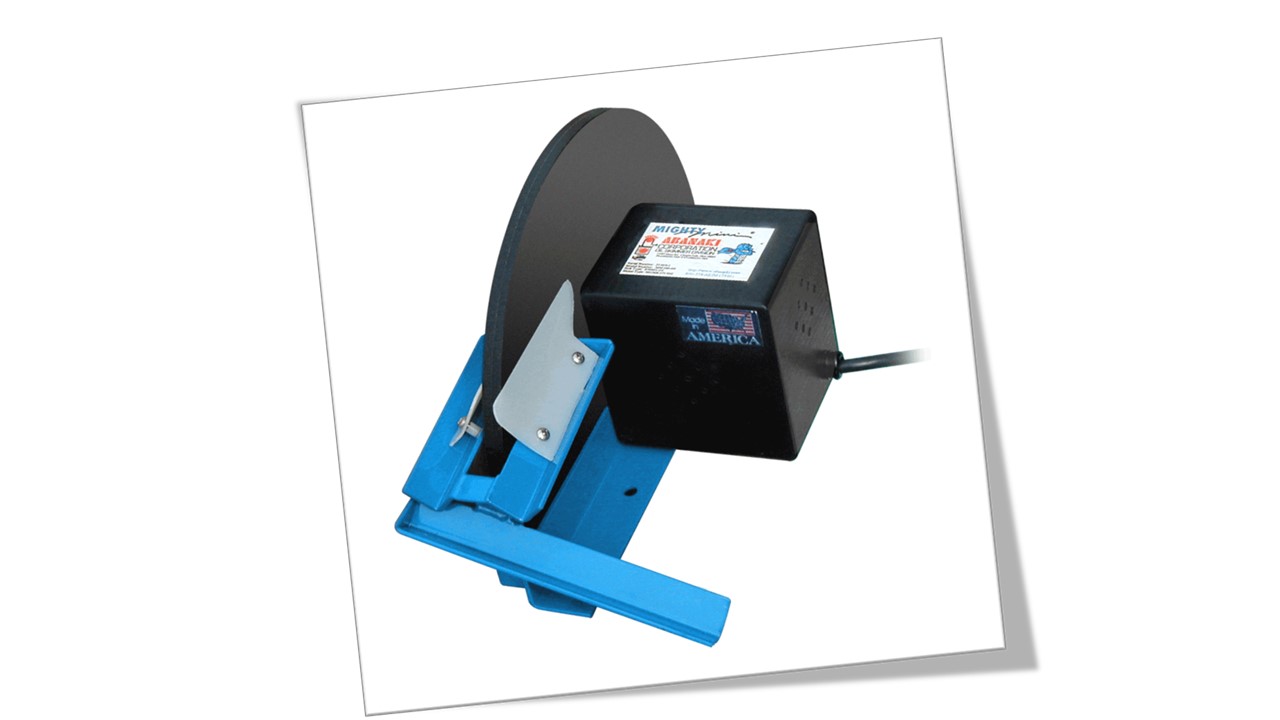
Find out more about Abanaki Mighty Disk™ oil skimmer that cuts cost and can be used almost anywhere.
Video: How To Tell If You Are Buying A High Quality Disk Oil Skimmer
To learn more about oil skimmers, please contact our experts at 440-543-7400 or visit our website: www.abanaki.com
Read more
What is Tube Oil Skimmer? | Abanaki
Tube oil skimmer is a surface tube oil skimmer that can effectively removes floating surface oils by means of an oleophilic (oil attracting) 3/4 inch diameter continuous looped tube. The tube extends out over the surface of the tank or pit and collects the free floating oils.
Abanaki tube oil skimmer (The Oil Viper) has a specially designed method for removing the oil from the tube. It has a unique wiper combination attached to the tube itself in addition to the ceramic wiper on the skimmer. The result is a virtually oil free tube as it leaves the surface oil skimmer for quicker oil removal. Removal rates can be as high as one hundred gallons per hour.
How Does a Tube Oil Skimmer Work?
The Oil Viper tube oil skimmer can be used in wastewater applications that are shallow in depth. The Oil Viper tube oil skimmer is a great fit where a belt skimmer is too big. Due to the sleek design of the Oil Viper tube oil skimmer it can skim in just inches of water compared to a belt skimmer which could need one to two feet of water to skim from.
The Oil Viper tube oil skimmer works off the same principle of the belt skimmer, the tube breaks the surface tension of the water, the oil is then collected and skimmed off by its unique wipe clean design. Two tube materials are available, the standard tube is great in a wide variety of applications; the high temperature tube is best suited for high temperature or caustic applications.
Large Tube Oil Skimmer
Large tube skimmers use a floating plastic hose that snakes out over the surface of the liquid and is then drawn back through the drive unit where oil is removed. This design requires a relatively large amount of fluid surface area for proper operation. Length considerations are the same as for belt skimmers; a typical tube diameter is 1 inch.
Small Tube Oil Skimmer
Mini tube skimmers are very similar to the larger tube units, but typically have either a 3/16-inch or a 5/16-inch diameter tube. The 5/16-inch diameter is preferable as it has enough stiffness to not drag on the housing and prematurely wipe off oil when drawn into the unit. Pickup rates vary from 1 quart/hour to 1.5 gph, depending on diameter and speed. These units can be used where space is limited. Units that have the motor mounted underneath reduce the amount of space required over the rim of the tank to nearly zero.
Video: Tube Oil Skimmer | Oil Viper | Abanaki
To learn more about Abanaki oil skimmers, please contact our experts at 440-543-7400 or visit our website: www.abanaki.com
Read more
Belt Oil Skimmer Keeps Parts Washers Clean | Abanaki
Have you ever had your clean parts rejected from your customer? Parts that have been cleaned in your parts washers, yet they still have residual oils on them? This happened to one of my customers recently, and it’s not uncommon. Fortunately, there is a simple solution that will save you time, money, and embarrassment of having parts rejected.
Tote-It Belt Oil Skimmer
Abanaki Tote-It Belt Oil Skimmer will remove the oil that is floating on the surface of the parts washer and is being reintroduced onto the clean parts when they are removed from the parts washer. The Tote-It belt oil skimmer removes up to 12 gallons per hour of oil from water, and it is made to withstand the high temperatures and pH levels that can be associated with parts washers.
With its patented design, the Tote-It belt oil skimmer is a dependable and effective means of removing oil from water. The single assembly unit can be used in any application where 115 VAC, 60 Hz power is available.
Belt Oil Skimmer Specifications
The Tote-It belt oil skimmer utilizes a continuous belt and wiper to remove up to 12 gallons of oil per hour from the fluid surface. The belt operates on a motor and pulley system attached to a stabilizer bar that is immersed in the contaminated liquid. After traveling over the head pulley, the belt passes through tandem wiper blades where oil is scraped off both sides of the belt, and discharged through a 1-1/4 in. ID hose. The tail pulley has flanges which allow it to roll freely on the inside of the belt without becoming dislodged. It does not need to be fastened to the tank.
Advantages of Belt Oil Skimmer
The Tote-It belt oil skimmer is especially well suited for parts washing and machining center applications. By removing surface oil from a wash tank, the parts will not be re-contaminated as they are withdrawn. Removing tramp oil from a coolant tank prevents excessive smoke and fumes due to oil burning during cutting operations. It also reduces bacteria growth in the tank, along with the resulting odor.
Video: How Does a Portable Oil Skimmer Work?
To learn more about oil skimmers, please contact our experts at 440-543-7400 or visit our website: www.abanaki.com
Read more
How Do Oil Skimmers Work? | Abanaki
Oil Skimmers are simple, dependable and effective tools for removing oil, grease and other hydrocarbons from water and can pay for themselves within a few months.
When properly selected and applied, oil skimmers are a highly economical solutions for separating oil from water to allow its reuse or safe disposal.
All oil skimmers rely on the fluid properties of specific gravity and surface tension although designs may vary. Most use a moving medium to remove floating oil from a liquid surface. Floating oil and grease cling to skimming media more readily than the water. This allows media (in the shape of a belt, disk, drum, etc.) to pass through the fluid surface to pick up floating oil and grease while leaving most of the water behind. The oily material is subsequently removed from the media with wiper blades or pinch rollers.
Grease Skimming
Often, a skimmer by itself can achieve the required level of water purity. For more demanding situations, skimming is a cost-effective pretreatment before more complicated and costly treatments, such as coalescers, membrane filters and chemical processes are employed.
Video: Removing Grease and Oil from Water
To learn more about oil skimmers, please contact our experts at 440-543-7400 or visit our website: www.abanaki.com
Read more
The Scoop on Oil Skimmers | Abanaki
Understand the Basics
First, understand that while designs vary, all oil skimmers rely on the fluid properties of specific gravity and surface tension. Most use a moving medium to remove floating oil from the fluid’s surface. Floating oil and grease cling to skimming media more readily than water. This allows media in the shape of a belt, disk, drum, etc. to pass through the fluid surface and pick up floating oil and grease while rejecting most of the water. The oily material is subsequently removed from the media with wiper blades or pinch rollers.
Ensure Your Application Applies
Select by Application
There are several types of industrial oil skimmers. Choosing one best suited for your application will maximize oil removal while minimizing capital outlay and skimmer operating costs. You may define the application in terms of the following characteristics: operating Conditions, hazardous materials, temperature/viscosity, skimmed water content, residual oil, portability, tank or sump characteristics, size/design, shape, and location/installation.
Determine the Right Design
Consider All the Options
All moving media skimmers use motors to move the belt, tube, disk, etc. While many are designed with standard, industrially rated, continuous-duty motors and also may use fully enclosed speed reducing drives, some can be specified with a number of motor options. Consider also any optional equipment that may be available with the skimmer you are evaluating. Accessories allow customized systems that can ease installation and optimize performance. Some of the more common options include: special drive components, mounting stands and adapters, shelters/ enclosures, controls/accessories, concentrator, and heaters.
To learn more about oil skimmers, please contact our experts at 440-543-7400 or visit our website: www.abanaki.com
Read more