
Abanaki Corporation Oil Skimming Division
17387 Munn Road
Chagrin Falls, OH 44023
Phone: (440) 543-7400
Email: skimmers@abanaki.com
Fax: (440) 543-7404
ISO 9001:2015 Certified Company
Terms and Conditions

Abanaki Corporation Oil Skimming Division
17387 Munn Road
Chagrin Falls, OH 44023
Phone: (440) 543-7400
Email: skimmers@abanaki.com
Fax: (440) 543-7404
ISO 9001:2015 Certified Company
Terms and Conditions
Oil Skimmers Suitability for Outdoor Application | Abanaki
In outdoor applications, the use of heaters may be required to keep skimmed product fluid so it can be effectively removed from the medium and collection tray. This is particularly true for grease skimming, which involves higher viscosity at all temperatures. Polymer materials are limited in their heat tolerance, so oil skimmers equipped with these media may have only tray heaters.
Oil Skimmers Accessories
Oil skimmers with steel media can apply heat to both the tray and the medium, which improves performance in severe winter climates. To resist corrosion, a stainless-steel housing also may be needed. Above ground enclosures and underground manway mounting kits provide additional protection from the elements.
Commonly used materials for wiper blades are nitrile, [CRV] and ceramics. Nitrile is suitable for use as high as 176° F in neutral pH liquids. For higher temperatures and acidic or alkaline liquids, [CRV] wipers work well. Ceramics are resistant to more chemicals, but are prone to breakage.
For hazardous duty locations with ignitable fumes, explosion-proof motors are mandatory. Special corrosion resistant motor housings may be required for sanitary washdown situations in food plants. Different voltages and power frequencies are needed for some plants.
In many applications, oil skimmers can run unattended for days or weeks. This is typical for groundwater remediation applications at remote well sites. When controls are used, they tend to be either manual on/off switches or 24-hour timers to start and stop the unit at predetermined times.
Oil Skimmer Reliability and Maintenance
In terms of drive designs, those with separate gear reducers tend to be somewhat more robust than unitary gear motor drives. Chain drives, which are found on a few models, need to be lubricated regularly and the chain should be protected from debris and other impediments.
To learn more about oil skimmers, please contact our experts at 440-543-7400 or visit our website: www.abanaki.com
Abanaki Model 8 Belt Skimmer in Operation
Read more
Rescue Your Coolant with Abanaki’s Oil Boss Coolant Skimmer | Abanaki
Coolant skimmers typically don’t come attached to CNC machines when they are newly bought. This is because nobody wants to admit that the brand-new machine is eventually going to leak oil into the coolant. This looks good on paper, but there is a reason why so many coolant skimmers are bought annually. CNC machines are bound to have at least a small amount of oil leaking into the coolant at some point. The skimmer will remove this oil from the top of the coolant for disposal. Without some type of coolant skimmer, the coolant life will be dramatically decreased. These small coolant skimmers will save you money throughout the operational life of your CNC machine.
Coolant skimmers can really help in extending the life of your costly coolant. Coolant skimmers help remove oils that leak from machines or parts to keep your coolant clean. By removing the oil with coolant skimmer, you can significantly increase the life of your coolant.
So, is your product quality being affected by floating oil? Have you asked yourself how you remove oil from water effectively and efficiently?
Abanaki’s Oil Boss Oil Skimmer
One of the best coolant skimmers of Abanaki coolant maintenance line is Abanaki’s Oil Boss Oil Skimmer. This high-capacity unit constantly removes and discharges unwanted oil from the coolant that is compromising your product quality, reducing your coolant life, and stinking up the shop. The unit uses a specially designed “Constant Flow Facilitator” that automatically discharges the tramp oil skimmed from the coolant. The “Constant Flow Facilitator” eliminates the need to manually remove the collect oil.
Benefits of Oil Boss Oil Skimmer
We have been providing oil skimmers for years to machine shops and manufacturers across the globe and they have proven to be both reliable and cost-effective. Abanaki’s Oil Boss is an innovative tool for keeping coolant free of oil. The patent-pending design allows for easy visual inspection of your coolant’s condition; and will also help extend tool and coolant life. It will decrease loss of production and maintenance time. And it will allow for easy cleaning of various sumps or tanks around any plant or shop due to its portability and magnetic base. The Oil Boss has a small footprint that reduces the amount of clutter and equipment on the shop floor.
To learn more about oil skimmers, please contact our experts at 440-543-7400 or visit our website: www.abanaki.com
Watch this video to see how to remove a higher amount of tramp oil.
Read more
Oil Skimming is the Most Effective Solution to Refineries | Abanaki
Refineries are capable of producing gasoline, jet fuel, or even asphalt and, like most large-scale high-capacity plants, require process optimization and advanced process controls.
Oil Skimming Solution
By implementing an oil skimming solution, the goal to recapture 100% of all hydrocarbons before they go down the drain, can be achieved. The oil skimmer collects the bulk of the hydrocarbons and sends them back to a crude tank. Any residual oils can be removed through filtration or chemical treatment. The oil skimmer is operated 24 hours a day 7 days a week. A refinery oil skimmer requires very little oversight, no maintenance, and the time saved more than offsets the electrical costs.
Abanaki Oil Skimmers
The Model 8 oil skimmer is the most widely used Abanaki oil skimmer. Its size and removal capacity make it suitable for most applications. From a mere shimmer on top of water to a heavy oil slick, the Model 8 oil skimmer performs efficiently, removing up to 40 gallons of oil per hour.
The Model 4 oil skimmer utilizes a continuous belt and wiper to remove up to 20 gallons of oil per hour from the fluid surface. Depending on the characteristics of the liquid, it is possible for the Model 4 alone to reduce oil content to less than five parts per million in water.
The Abanaki Oil Viper tube skimmer is a surface oil skimmer that effectively removes floating surface oils by means of an oleophilic (oil attracting) 3/4 inch diameter continuous looped tube. The tube extends out over the surface of the tank or pit and collects the free-floating oils. The Oil Viper has a specially designed method for removing the oil from the tube. It has a unique wiper combination attached to the tube itself in addition to the ceramic wiper on the skimmer.
To learn more about oil skimmers, please contact our experts at 440-543-7400 or visit our website: www.abanaki.com
Oil Skimmers Get the Dirty Jobs Done
Read more
Oil Skimmers for Hydroelectric Power Plants | Abanaki
Small leaks of hydraulic oil from turbines at hydroelectric plants are common and can end up in the facility’s sump or in its water resource. Oil skimming cost-effectively removes the oil before the water is discharged into the environment.
Typically, the utility is charged with environmental stewardship of the adjacent reservoir or river that is vital to hydro power generation. Often the reservoir or river also provides a public recreation, and it may be a source for drinking water and irrigation. Hydraulic oil leaks cannot be tolerated.
Utilities may employ absorbents and other manual methods of oil skimming. These methods are messy and inefficient, and take maintenance personnel away from more important work. In contrast, Abanaki oil skimmers are proven in thousands of applications to be the lowest maintenance and most reliable means of oil removal.
Oil Grabber® Model 8 Oil Skimmer
The Oil Grabber® Model 8 oil skimmer is a dependable and cost-effective tool for removing oil from sumps in hydroelectric plants. With its rugged construction it is made to last many years with little or no maintenance. The Model 8 oil skimmer utilizes continuous belt and wipers to remove oil from existing sumps. With its specially designed belts, it can collect virtually all oils present in sumps, and with the optional oil concentrator it can virtually eliminate any residual water that may be picked up.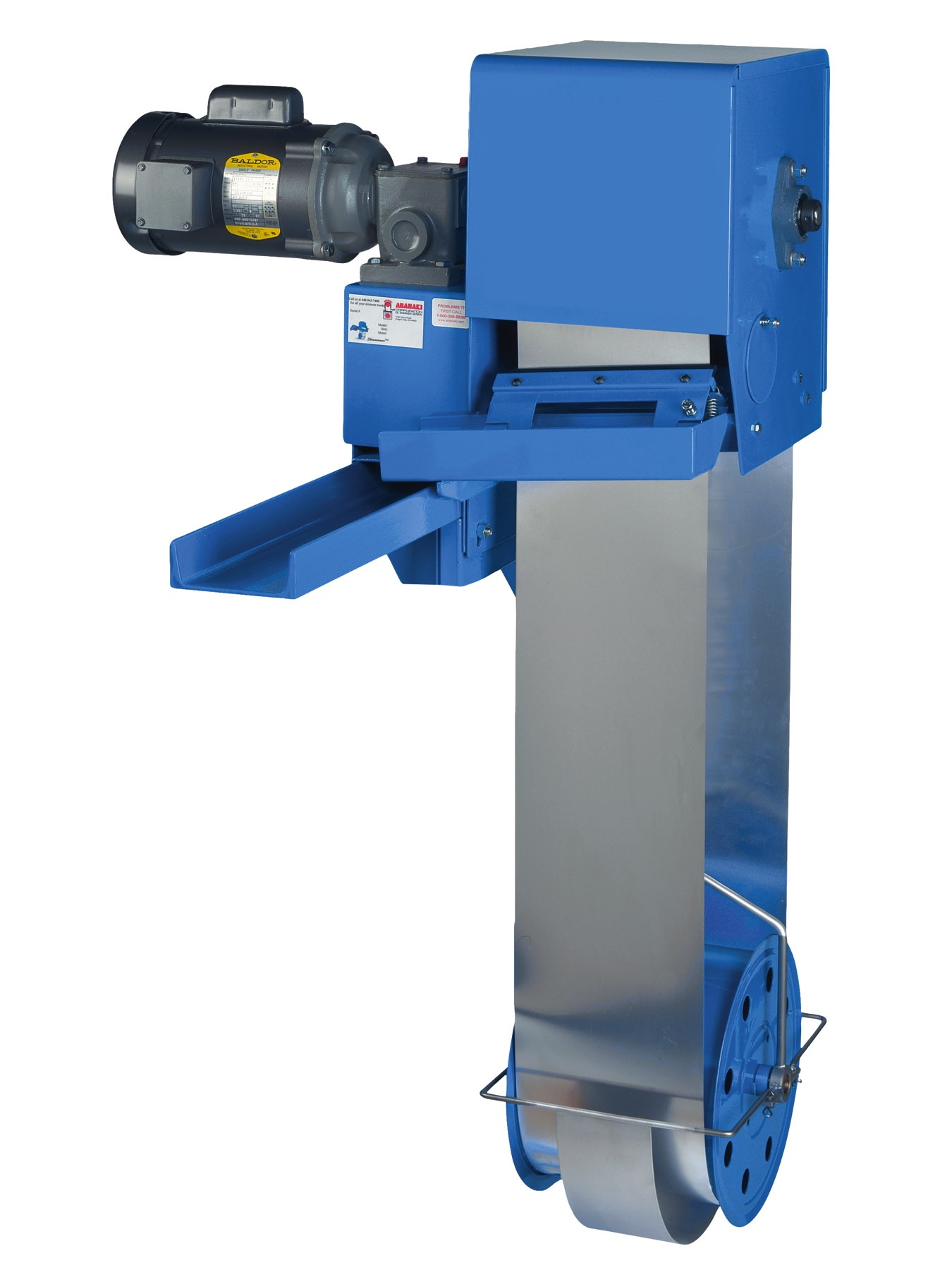
Oil skimming makes use of the differences in specific gravity and surface tension between oil and water. These physical characteristics allow the belt skimmer to attract oil and other hydrocarbon liquids from the surface of the fluid. The Model 8 can be used in tanks with depths as shallow as one foot, or as deep as 100 feet.
The Model 8 Oil Skimmer may be part of an emergency oil spill system, in which wastewater flows through a coalescer tank, is skimmed, and then passes though filters. These systems satisfy the requirements of government standards intended to prevent oil spills from entering the environment. Abanaki has experience in designing and installing complete emergency oil spill systems for the power generation industry.
To learn more about oil skimmers, please contact our experts at 440-543-7400 or visit our website: www.abanaki.com
Abanaki Model 8 Belt Skimmer in Operation
Read more
Are Oil Skimmers in your Machine Shop? | Abanaki
Tramp oil got you down? Is your product quality being affected by floating oil? Have you asked yourself how you remove oil from water effectively and efficiently?
Coolant Maintenance
Coolant maintenance should always be a top priority in shops. Dirty machine coolant can cause a multitude of problems for manufacturing facilities and CNC machines. Not using clean coolant can cause health issues in the workplace, reduce the life of the equipment used, and can significantly slow a process down. All of these factors lead to loss in production which leads to loss in profit for companies. And while recycling steel, aluminum, paper, and glass is readily accessible, recycling coolant is not. Additionally, the cost of recycling used coolant can be very expensive.
Coolant Skimmers Help Reduce Costs for Machine Shops
Coolant skimmers typically don’t come attached to CNC machines when they are newly bought. This is because nobody wants to admit that the brand-new machine is eventually going to leak oil into the coolant. This looks good on paper, but there is a reason why so many coolant skimmers are bought annually. CNC machines are bound to have at least a small amount of oil leaking into the coolant at some point. The skimmer will remove this oil from the top of the coolant for disposal. Without some type of coolant skimmer, the coolant life will be dramatically decreased. These small coolant skimmers will save you money throughout the operational life of your CNC machine.
Coolant skimmers help machine shops extend the life of their coolant by removing free floating oils. In today’s economic conditions every company is trying to look at ways to reduce costs and increase efficiency. Coolant can be a major expense but is a necessary evil. Abanaki offers a complete line of coolant maintenance products that go beyond coolant skimmers to offer various solutions for other coolant problems. The coolant maintenance line addresses concerns about coolant life as well as that rotten egg smell and small spills. If you have coolant in your machine shop, you need a coolant skimmer. See our full line of coolant skimmers here.
To learn more about oil skimmers, please contact our experts at 440-543-7400 or visit our website: www.abanaki.com
Read more
Tips for Effective Oil Skimming – Part 3 | Abanaki
Companies always look for effective ways to remove oil from water or coolant. Here are few more easy tips to skim oil from water or coolant.
If the skimmer must be run when little or no oil is present, use an oil concentrator
Under most operating conditions, skimmers pick up oil with only small traces of water. However, as surface oil is reduced to a thin layer (1/16 inch thick or less), more water (or coolant) may be picked up along with the oil. When used in tandem with an oil skimmer, the oil concentrator solves this problem by providing final phase separation. The result of this is optimal levels of water or coolant becoming available for recycling, and virtually water-free oil for is collected by the skimmer.
Choose the right belt for your application
Take the time to study which belt best fits your application – it will maximize the life of the skimmer belt and optimize the efficiency of skimmer. This applies to both length of the belt and the material of which it is constructed. As mentioned previously, choose a belt length that assures contact with the liquid at its lowest level. Belt materials are wide ranging and need to be selected based on variables such as the type of oil being collected, the liquid media that the oil is being collected from, and whether the skimmer is being used in an interior or exterior application. Any good skimmer dealer should be able to offer assistance when it comes to belt selection. Testing different belt materials prior to final selection is always a wise course of action.
Choose the optimal location for the skimmer to be mounted
Power availability and accessibility for routine maintenance need to be considered when selecting the location of the unit. Once that locale has been narrowed down, the skimmer should be mounted so that the down stroke of the belt is facing the bulk of the floating oil and is not within 2 feet of a wall or a tank side. This will ensure that the belt will be positioned to attract the maximum amount of oil, without allowing any dead zones where oil can be allowed to become stagnant.
Always remember that the friendly support staff of Abanaki Corporation is just a phone call away to help you with any of your skimming needs. Abanaki has emerged as the world leader in oil skimming solutions, serving industries as diverse as iron and steel, wastewater, paper, food processing, automotive, environmental remediation and recycling. With a guiding principle that has become a corporate motto, “Clean Our World” is the philosophy we have in mind when servicing our customers. If you have any questions about your oil skimming application, please call us. We are here to help!
To learn more about oil skimmers, please contact our experts at 440-543-7400 or visit our website: www.abanaki.com
Read more